October 2025
Under the D4H Initiative, the CRVS and Data Impact programs have been supporting the Government of Mozambique since 2021 in strengthening multiple components of the mortality data ecosystem. During the high-level side event “Mortality Surveillance in Mozambique: Approaches, Challenges and Models of Success,” organized in October 2025 by the National Health Observatory (ONS) at the National Health Institute (INS) Scientific Conference, government partners presented progress made on strengthening mortality data systems and discussed the path forward. DIP supported and participated in the side event and provided technical assistance in shaping the event to ensure multisectoral dialogue.
During the event, partners highlighted key achievements, including the modernization of civil registration through the electronic CRVS system (e-SIRCEV), expansion of community surveillance via the Surveillance and Observation of Vital Events System (SIS-COVE), improved cause-of-death data, and the first steps toward interoperability between systems. Senior leaders from the National Statistics Institute, the Ministry of Justice, INS, and the Manhiça Health Research Center (CISM)/Child Health and Mortality Prevention Surveillance (CHAMPS) team shared that these combined improvements have significantly increased the availability of mortality data by addressing persistent bottlenecks.
Decision-makers discussed how reliable and integrated mortality data are essential for guiding multisectoral action, informing resource allocation, and advancing Mozambique’s commitments toward the United Nations Sustainable Development Goals. TThe side event exemplified how DIP has supported ONS to transform data communication – moving from technical, expert-only presentations to roundtables and policy dialogues with active participation of high-level decision-makers.
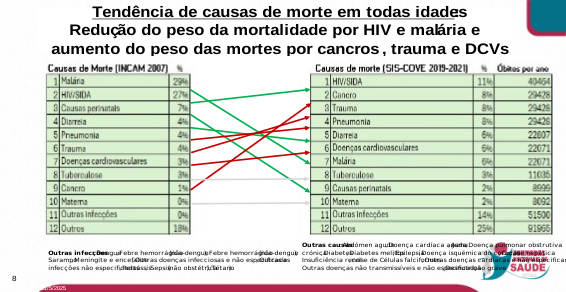
Participants discussed policy implications emerging from the data. Harmonized data from e-SIRCEV, SIS-COVE and CHAMPS reveal an epidemiological transition consistent with the triple burden: declining mortality due to infectious diseases and a rising burden of noncommunicable diseases and injuries. This shift has strengthened institutional engagement and generated concrete impact: mortality data are informing national policy briefs on road crashes and injury prevention, supporting coordination between the Ministry of Health, the National Institute of Road Transport and Ministry of Justice. The next phase of work will continue building on these gains to ensure that mortality evidence is increasingly translated into policy and action. The ONS will further expand dialogue with data users to showcase available products, better understand their needs, and promote wider use of mortality data in decision-making.