September 2026
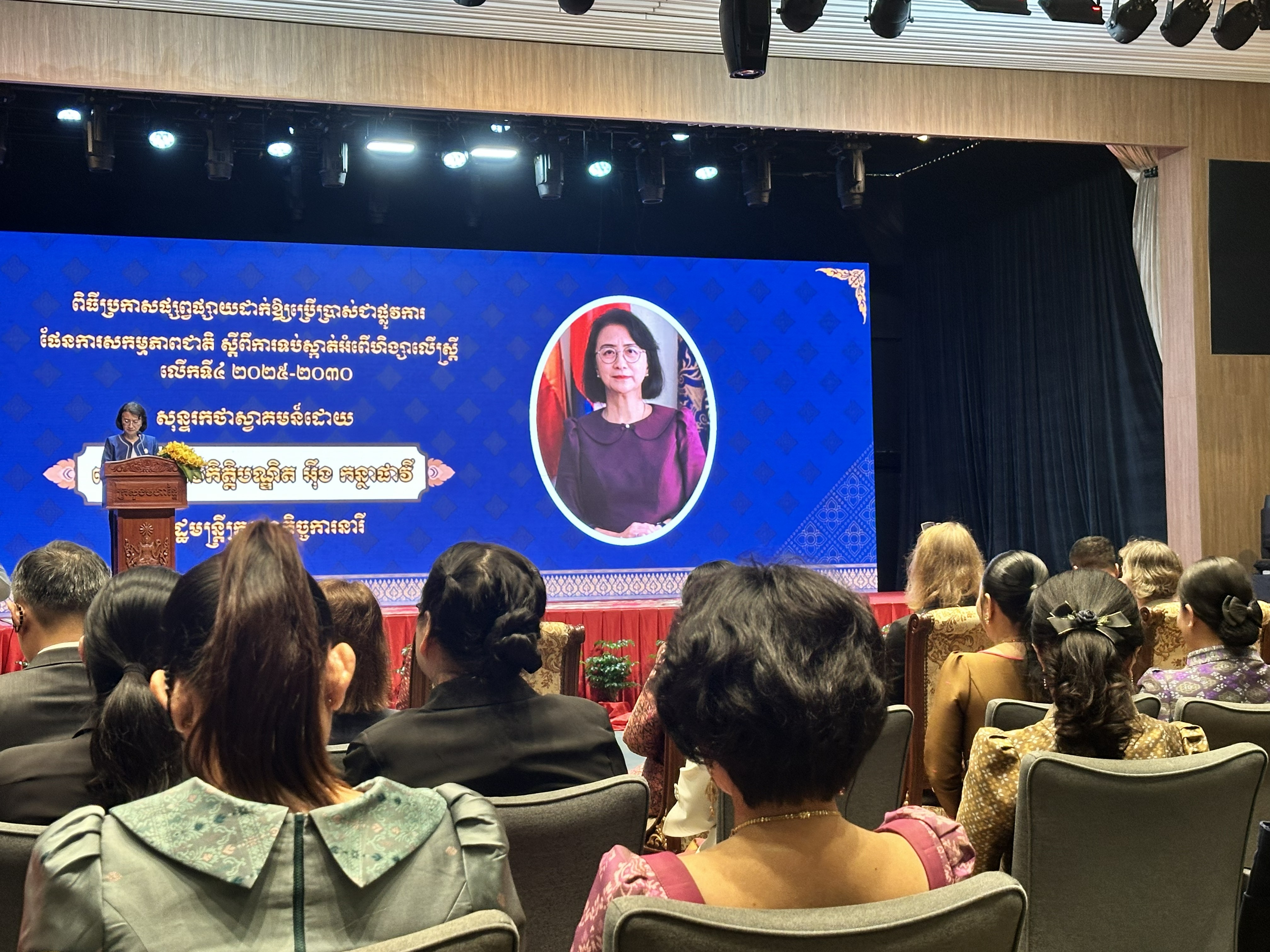
In September 2026, the Ministry of Women's Affairs (MoWA) launched the 4th National Action Plan for Preventing Violence Against Women 2025–2030, incorporating recommendations on gender-based violence (GBV), early child marriage, and women’s leadership that were developed through the Data to Policy program.
Between 2024 and 2025, MoWA and the Ministry of Health (MoH), with support from Data Impact’s Data to Policy program, developed evidence-based policy briefs. Disseminated in October 2024, the brief synthesized research and national data to inform policy dialogue and generated recommendations across key areas, including preventing and responding to GBV through evidence-informed policies, stronger multisectoral coordination, and improved survivor-centered services; addressing the social and economic drivers of early child marriage; and strengthening the agency, economic opportunities, education, and leadership of women and girls. They also highlighted the importance of scaling up inclusive women’s empowerment programs, strengthening community engagement, and building women’s leadership and participation in policy development and decision-making, supported by robust monitoring, evaluation, and learning systems.
To advance these recommendations, MoWA led the development of the National Action Plan, beginning with consultations in 2024. In June 2026, Prime Minister Samdech Moha Borvor Thipadei Hun Manet chaired a plenary session of the Council of Ministers at the Peace Palace, where the plan was officially endorsed and approved.
The plan focuses on four strategic areas: prevention; legal protection and multisectoral services; formulation and implementation of laws and policies; and monitoring, evaluation, and learning. Under legal protection and multisectoral services, the plan aims to strengthen accessible, coordinated, and quality services for women affected by violence by updating the terms of reference for GBV working groups, establishing new groups, and strengthening coordination, case management, and service delivery in provinces and districts. In the health sector, priorities include finalizing One-Stop Service Unit (OSSU) standard operating procedures, expanding the OSSU model to other provinces, and training forensic committees on updated guidance. Overall, the plan aims to reduce intimate partner and non-partner violence against women and girls aged 15 and above (SDG 5.2.1, 5.2.2) and to reduce child marriage (SDG5.3.1), with indicators sourced from the Cambodia Demographic and Health Survey (CDHS).
At the launch, His Excellency Abhisantibindit Sar Sokh, Deputy Prime Minister and Minister of Interior, committed to tripling women's representation in national leadership, raising the rate from 3.5% today to 12% by 2028. He highlighted priorities from the Data to Policy briefs, including expanded OSSU services for GBV survivors, ending early child marriage, and increasing women's participation in decision-making.
The launch brought together 400 partners in government and public health, and the plan’s development has strengthened inter-agency collaboration to advance gender equality and protect women and girls across Cambodia.